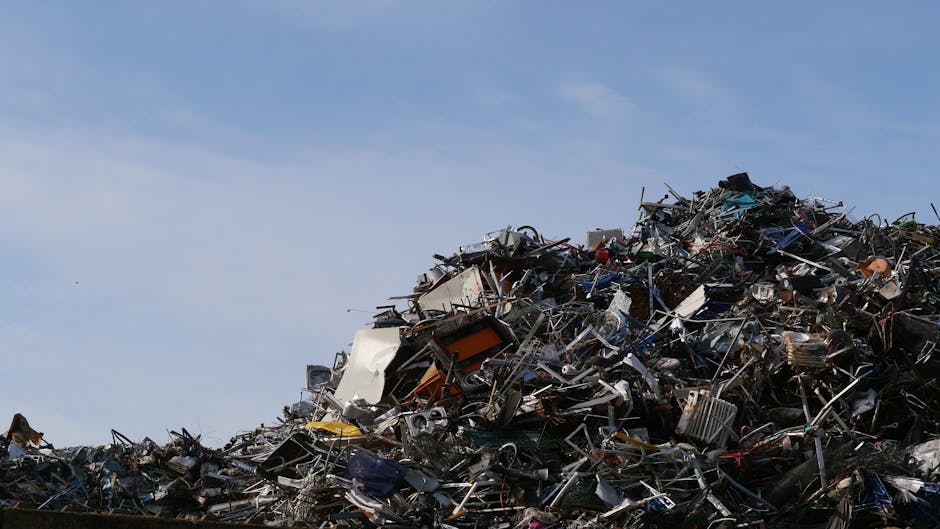
Guide to rubbish removal for Brimsdown Industrial Estate firms

If you run a firm on Brimsdown Industrial Estate, rubbish removal is one of those jobs that can quietly affect everything else. A cluttered yard slows loading. Skip overflow invites complaints. Mixed waste can create compliance headaches. And let's face it, nobody wants staff stepping around broken pallets, cardboard, packaging, or the odd awkward item that should have gone days ago.
This guide to rubbish removal for Brimsdown Industrial Estate firms explains how business waste clearance works, what to watch for, and how to keep things efficient without making a meal of it. You'll find practical steps, common mistakes, a simple comparison of options, and the kind of real-world detail that helps when you're trying to keep a site tidy on a busy weekday morning.
We'll also cover useful internal resources where relevant, including business waste removal, general waste removal, and recycling and sustainability. If your work involves offices, refurbishments, or mixed trade waste, those pages can help you line up the right service more quickly.
Quick take: the best rubbish removal setup is the one that fits your waste type, collection frequency, access constraints, and compliance needs. Simple enough in theory. In practice, the details matter.
- Why rubbish removal matters for Brimsdown Industrial Estate firms
- How business rubbish removal works
- Key benefits and practical advantages
- Who this is for and when it makes sense
- Step-by-step guidance
- Expert tips for better results
- Common mistakes to avoid
- Tools, resources and recommendations
- Law, compliance, standards and best practice
- Options, methods and comparison table
- Case study or real-world example
- Practical checklist
- Conclusion
- Frequently asked questions
Why Guide to rubbish removal for Brimsdown Industrial Estate firms Matters
Industrial estates are practical places. People are moving stock, receiving deliveries, unloading materials, and trying to keep operations flowing. Waste builds up fast, often without anyone noticing until there's a problem. A few stacked bags turn into a blocked fire route. A pile of shrink wrap becomes a trip hazard. A broken cabinet sits in the corner for another week because "we'll sort it tomorrow". Tomorrow, of course, has a habit of disappearing.
For firms on Brimsdown Industrial Estate, rubbish removal matters because it is tied to four things at once: safety, productivity, appearance, and cost control. If waste is handled badly, you may lose time twice over: once when staff have to work around it, and again when someone has to fix the mess. That's before you even get into missed collections, fly-tipping risks, or the wrong waste being placed in the wrong container.
There is also the customer-facing side. If clients visit your premises, the first thing they often notice is not your workflow; it's the yard, the entrance, the bin area, and the general feel of the site. A tidy site quietly says, "we know what we're doing". A messy one says the opposite, even if the actual service is excellent.
For some businesses, the waste stream is straightforward: cardboard, packaging, office clutter, or lightweight mixed rubbish. For others, it's more involved, such as builders' rubble, fixture removal, or obsolete equipment. If that sounds familiar, it may be worth looking at builders waste clearance for heavier site waste or office clearance when you are clearing desks, filing cabinets, and general workplace contents.
Table of Contents
- Why Guide to rubbish removal for Brimsdown Industrial Estate firms Matters
- How Guide to rubbish removal for Brimsdown Industrial Estate firms Works
- Key Benefits and Practical Advantages
- Who This Is For and When It Makes Sense
- Step-by-Step Guidance
- Expert Tips for Better Results
- Common Mistakes to Avoid
- Tools, Resources and Recommendations
- Law, Compliance, Standards, or Best Practice
- Options, Methods, or Comparison Table
- Case Study or Real-World Example
- Practical Checklist
- Conclusion
- Frequently Asked Questions
How Guide to rubbish removal for Brimsdown Industrial Estate firms Works
At a practical level, rubbish removal for commercial premises usually follows a simple pattern: identify the waste, separate anything that needs special handling, agree the collection method, and clear it from site safely. The simplest version is a one-off load-up and disposal. The more organised version is a recurring service with clear waste streams and predictable collection times.
In most cases, the process begins with a site review or an itemised description of what needs removing. This is where good communication saves time. A photo of the waste area can help a lot. So can a quick note about access, stairs, palletisation, loading bays, and whether a van can get close to the entrance. Truth be told, access is often the thing that changes a "quick job" into a less quick one.
Once the waste is identified, it is usually sorted into categories such as general rubbish, recyclable material, bulky waste, wood, metal, packaging, or construction-related debris. Some items are fine to collect with mixed waste. Others need to be separated, especially if they contain hazardous components or could contaminate recyclable loads.
From there, the collection team removes the material, loads it securely, and transports it for sorting, recycling, or disposal. Good providers will be clear about what happens next. If sustainability matters to your firm, ask how much can be diverted from landfill and whether the service supports recycling-led disposal. The recycling and sustainability page is a sensible place to start if you want a cleaner process on paper as well as on site.
For businesses with regular office turnover, broken furniture, or replacement stock, the job may be split between several types of clearance. That is where services such as furniture disposal and furniture clearance can be useful, especially when bulky items are blocking storage or meeting space.
Key Benefits and Practical Advantages
There's the obvious benefit: waste is gone. But the better reasons are a bit more interesting.
1. Better site safety. Clear walkways and loading areas mean fewer trips, fewer blocked exits, and less chance of staff improvising around rubbish. That matters more than people admit. A tidy floor is simply easier to work on.
2. More usable space. Every industrial estate firm knows the value of an extra square metre. When you remove old packaging, damaged shelving, or redundant equipment, you often find space you'd forgotten you had.
3. Faster day-to-day operations. Staff do not waste time moving things from one corner to another. Drivers can get in and out more easily. Stock checks are quicker. It all adds up.
4. Less disruption. Planned rubbish removal is easier on the team than ad hoc clear-outs. Nobody likes a last-minute scramble before a delivery or an inspection.
5. Better cost control. If waste is allowed to pile up, you may end up paying more for emergency clearance, extra labour, or additional container use. A regular plan is usually calmer and cheaper over time.
6. A more professional impression. This one is underrated. Clients, suppliers, and even new hires notice the environment. Clean yards and organised bin areas say something positive about your standards.
If your firm has more than one type of waste, combining the right services can be handy. For example, a business refurbishment might involve builders waste clearance for demolition debris and business waste removal for the everyday mixed load. Different streams, same goal: keep the site moving.
Who This Is For and When It Makes Sense
This guide is for firms that generate bulky, recurring, or mixed rubbish on Brimsdown Industrial Estate. That includes warehouses, light manufacturing units, trade counters, offices, workshops, storage businesses, and premises handling refurbishment waste or old fixtures.
It also makes sense for businesses that do not produce huge volumes but still need predictable, professional clearance. A small office might only need a quarterly tidy-up. A workshop may need regular removal of pallets, packaging, and offcuts. A retail-facing unit might need old display materials removed after a refresh. Different pace, same need.
Some signs you need a better rubbish removal setup:
- waste is regularly overflowing
- staff are moving rubbish manually more than once
- the bin area is attracting complaints or pests
- you have a growing pile of bulky items you keep "meaning to deal with"
- collections are too infrequent for the actual waste generated
- you are not sure what can be recycled and what cannot
Sometimes the issue is not volume, but variety. A business may have a mix of office waste, storage rubbish, damaged chairs, packaging, and the odd item from a refit. In that case, a broader clearance service is usually easier to manage than juggling several half-finished arrangements. That is where office clearance and waste removal can reduce admin and keep the process tidy.
Step-by-Step Guidance
Here is the most practical way to handle rubbish removal without overcomplicating it.
- Walk the site and identify waste types. Separate general rubbish, recyclables, bulky items, and anything that might need special treatment. A quick 10-minute walk-through often reveals more than you expect.
- Estimate the volume realistically. Not "about a van load" if it's actually three van loads. Honest estimates help you avoid delays, rebooking, or underpowered collections.
- Check access. Measure gates, confirm loading points, and make sure there is a route that staff can safely use. If the team needs to carry waste across a busy yard, say so upfront.
- Decide whether you need one-off or repeat collections. If rubbish builds steadily, recurring service usually makes more sense. If you are clearing a site after a project, a one-off load is often enough.
- Set aside anything reusable. Old furniture, shelving, or fixtures may still have value if reused. If not, they may still be suitable for responsible disposal through furniture disposal.
- Schedule the collection for a low-disruption window. Early mornings, quieter shifts, or off-peak periods can make a big difference. A collection at 7:30 a.m. feels very different from one landing mid-shift.
- Confirm the final scope before the team arrives. A short checklist of items, quantities, and access notes reduces confusion. No one enjoys discovering a surprise pile of scrap halfway through the job.
- Review what was removed and what remains. Good practice is to check the area after collection, confirm any separated items, and update internal records where needed.
If you handle this process well once, the next round becomes much easier. The system starts to feel familiar, which is exactly what you want. Predictable. Calm. Done properly.
Expert Tips for Better Results
In our experience, the best rubbish removal plans are rarely the fanciest. They are just clear. Here are a few small things that make a surprisingly big difference.
Label waste zones. Even simple signs such as "cardboard only" or "bulk items here" reduce mistakes. People will use the nearest obvious spot, so make the obvious spot the right one.
Use photos before the booking. A few well-lit photos of the waste area save a lot of back-and-forth. They also help avoid awkward surprises on the day, which, to be fair, everyone prefers.
Keep a basic waste log. You do not need a full office ritual for this. Just a simple note of what was removed, when, and from where. It helps with internal tracking and makes recurring collections smoother.
Think in streams, not just piles. Cardboard, mixed rubbish, metal, wood, and fixtures often need different treatment. When waste is separated early, recycling improves and disposal usually becomes easier.
Protect the route. If the collection team has to pass through active working areas, make sure the path is clear. A couple of cones, temporary tape, or a brief staff reminder can prevent delays.
Do not ignore small items. Loose packaging, broken fittings, and little scraps create more annoyance than they seem to deserve. Funny how that works. The smallest mess can make a site feel untidy.
Match service type to the job. One-off clear-outs, regular commercial waste, and bulky item disposal are not always interchangeable. If your premises also deal with stock changes or site works, use services that align with the job rather than forcing everything into one basket.
Common Mistakes to Avoid
A lot of rubbish removal problems come down to avoidable habits. The good news is that most of them are easy to fix once you spot them.
- Waiting too long to book. Waste tends to expand. The longer it sits, the more awkward it becomes.
- Mixing everything together without checking. That can make recycling harder and may create issues if certain materials need separate handling.
- Underestimating access problems. Narrow turns, locked gates, uneven ground, or shared yard space can all slow a collection down.
- Leaving staff unsure what goes where. If nobody is responsible, waste habits drift. Usually not in a good direction.
- Forgetting bulky furniture and fixtures. Desks, shelving, cabinets, and shop fittings often need a separate plan.
- Assuming all clearances are the same. An office clearance, a builders waste job, and a general rubbish removal round are similar only at a distance.
- Choosing on price alone. Cheapest is not always best if the service is slow, unclear, or poorly matched to your waste type.
A classic one is the "we'll just put it by the bins" approach. That works right up until it doesn't. Then it becomes everyone's problem, and usually on the wettest day of the week.
Tools, Resources and Recommendations
You do not need much to run a better rubbish removal process, but the right tools make it far easier.
- Basic site photos: good for quoting and planning.
- Simple waste category labels: useful for staff who need to separate items quickly.
- Measuring tape: surprisingly handy for access checks, bulky items, and load planning.
- Internal waste log: even a spreadsheet works fine.
- Consistent collection window: routine is your friend here.
For businesses comparing services, start with the pages that match the type of waste you are managing. If you are focused on commercial and operational waste, business waste removal is the most relevant overview. If your site has a lot of mixed material after works or strip-outs, builders waste clearance may be the better fit.
It is also worth reviewing the company's trust and operational pages. The about us page can help you understand who you are dealing with, while insurance and safety and health and safety policy give useful reassurance for businesses that care about due diligence. If you need the admin side sorted before work begins, pricing and quotes is the obvious place to check.
Law, Compliance, Standards, or Best Practice
Waste handling in the UK is not something to muddle through casually. You do not need to become a legal specialist, but you do need to treat waste responsibly and make sure the service you use follows sensible business practice.
For Brimsdown Industrial Estate firms, the main compliance themes are straightforward: duty of care, correct segregation where practical, safe loading, and proper disposal routes. In plain English, that means knowing what you are handing over, keeping waste from being dumped irresponsibly, and choosing a provider that handles the job properly from site to final destination.
It is wise to ask how waste is handled after collection, whether recyclable material is separated, and what the provider does with bulky or awkward items. If a company cannot explain its process clearly, that is usually worth paying attention to. Not panic. Just attention.
Health and safety matters too. Industrial estate sites often involve moving vehicles, tight access, and people working nearby. Collections should be planned so that staff, visitors, and the waste team are not improvising around each other. That kind of chaos looks exciting for about thirty seconds and then becomes a headache.
Business customers should also read service terms carefully. Payment timing, site access expectations, liability boundaries, and cancellation rules can all matter if your operations are time-sensitive. You can review the terms and conditions and payment and security pages to get a better sense of the practical side before booking.
Finally, sustainability is increasingly part of good business practice rather than a nice extra. Recycling suitable waste, reducing contamination, and avoiding unnecessary disposal all support a cleaner, more efficient operation. That is why the recycling and sustainability page is relevant even for firms that simply want a tidy site.
Options, Methods, or Comparison Table
Different waste setups suit different firms. Here is a simple comparison to help you decide what feels realistic.
| Method | Best for | Pros | Watch-outs |
|---|---|---|---|
| Ad hoc one-off rubbish removal | Occasional clear-outs, end-of-project waste, bulky items | Simple to arrange, good for short-term needs | Can be inefficient if waste builds regularly |
| Regular commercial waste service | Ongoing office, warehouse, or trade waste | Predictable, easier to budget, less clutter | Needs accurate volume planning |
| Mixed waste clearance | Sites with varied rubbish streams | Flexible and practical for busy premises | Sorting may still be required for some materials |
| Targeted clearance | Furniture, office contents, or builders debris | Good for specific jobs and cleaner disposal | May need separate booking if waste types differ |
In many Brimsdown estate settings, the best answer is a mix: regular handling for everyday waste, plus targeted clearances when the site changes. That is especially common during office refits, stock rotation, or temporary works.
Case Study or Real-World Example
Here's a realistic example. A small trade firm on the estate has a unit with packaging waste, a few damaged shelving sections, and two old cabinets that have been sitting near the back wall for weeks. Staff keep moving around them. Nobody has time to sort it out, and the waste area is starting to feel cramped.
Instead of waiting for a full-scale clear-out later, the firm arranges a focused collection. They take photos, list the bulky items, and note that access is via a narrow loading point behind the unit. The waste team turns up with the right vehicle, removes the mixed rubbish first, then takes the bulky furniture and shelving in a second pass. The site is cleared in one morning, and staff can use the back area again by lunch.
What made the difference? Not clever technology. Just accurate information and the right service for the job. The firm could have tried to drag everything to a skip, but that would have taken longer and eaten up staff time. Sometimes the simplest professional clearance is the least disruptive route.
Another common example is an office on an industrial estate clearing old desks, chairs, and filing cabinets after a small relocation. In that case, office clearance is usually the neatest option, especially when you want fewer moving parts and less internal lifting.
Practical Checklist
Use this before booking any rubbish removal for your Brimsdown Industrial Estate premises.
- Identify all waste types on site
- Separate anything hazardous or special-case before collection
- Estimate volume honestly
- Check access, gates, loading points, and parking
- Decide whether you need one-off or regular collection
- Photograph the waste area clearly
- Set aside reusable items if relevant
- Confirm collection timing with your team
- Review service terms before booking
- Ask how recyclable waste is handled
- Keep a basic record of what was removed
- Inspect the area after collection
Small but important point: if one person owns the waste process, things run better. Not because they love rubbish, obviously, but because responsibility stops tasks from drifting into the background.
Get a free quote today and see how much you can save.
Conclusion
For firms on Brimsdown Industrial Estate, rubbish removal is not just about making things look tidy. It is about keeping work moving, protecting safety, reducing friction, and staying in control of the site. When waste is handled properly, everything feels a little easier. Deliveries move better. Staff waste less time. The place feels sharper.
The best approach is usually the one that matches your actual workflow rather than a generic setup. Start with the waste you really have, think about access and frequency, and choose a service that can handle commercial reality rather than ideal conditions. That way, you are not constantly firefighting a pile of rubbish that could have been dealt with days earlier.
If you are planning a clear-out, reviewing regular waste handling, or just want a better system for bulky items, the right place to begin is with a clear scope and a trustworthy provider. Keep it simple. Keep it tidy. The rest tends to follow.
And yes, a clean yard really does make the whole day feel better.
Frequently Asked Questions
What is the best rubbish removal option for a firm on Brimsdown Industrial Estate?
The best option depends on the waste type and how often it builds up. For ongoing rubbish, regular commercial waste removal is usually the most efficient. For one-off clear-outs, a targeted rubbish removal or bulky waste collection may be better.
How do I know whether I need business waste removal or builders waste clearance?
If the waste is ordinary commercial rubbish, packaging, office items, or mixed operational waste, business waste removal is usually the right fit. If it is heavy debris, rubble, or material from building works, builders waste clearance is usually more appropriate.
Can furniture be included in a commercial rubbish removal?
Yes, but bulky furniture is often easier to handle through a specific furniture disposal or furniture clearance arrangement. That is especially true for desks, chairs, cabinets, and shelving.
How can industrial estate firms reduce rubbish removal costs?
Costs are often easier to control when waste is sorted properly, access is clear, and the load size is estimated accurately. Booking the right service first time is usually cheaper than arranging an emergency second visit.
Do I need to separate recyclable waste before collection?
It is usually a good idea where practical. Separating cardboard, metal, and clean packaging can improve recycling outcomes and reduce contamination. It also helps the collection team work faster.
What should I check before a rubbish removal team arrives?
Check access routes, gate widths, parking, the waste list, and whether any items need special handling. A few clear photos and a short summary of the site can prevent confusion on the day.
How often should a Brimsdown Industrial Estate firm arrange waste collection?
That depends on how quickly waste accumulates. Some premises need weekly or even more frequent collections, while others only need occasional clearances. The right schedule is the one that prevents overflow without creating unnecessary visits.
What happens to the rubbish after collection?
That depends on the type of waste and the provider's process. In good practice, reusable and recyclable materials are separated where possible, and the rest is disposed of responsibly. If sustainability matters, ask for a clear explanation before booking.
Can office waste and industrial waste go in the same collection?
Sometimes yes, sometimes no. Mixed waste collections can work well, but some materials may need to be separated for safety, recycling, or handling reasons. It is best to describe the load clearly before the booking.
What is the biggest mistake firms make with rubbish removal?
The most common mistake is waiting until the waste has already become a problem. A close second is underestimating the amount or type of rubbish involved. Both lead to stress, delays, and avoidable cost.
Is rubbish removal suitable for small businesses as well as larger firms?
Absolutely. Small businesses often benefit just as much, especially if they have limited storage, a small yard, or a busy office area that gets cluttered quickly. You do not need a huge site for waste to become a nuisance.
Where should I start if I want a better waste setup for my premises?
Start by identifying your waste streams, checking how often rubbish builds up, and reviewing your access and storage space. From there, compare the type of service you need and look at the relevant pages such as business waste removal and pricing and quotes.